Citizen Science: When research opens up to all
Citizen Science connects the world of professional scientists with enthusiastic volunteers from the public. Anyone who is interested in a topic can become part of real research - often purely out of enthusiasm and without any reward. Although people have been observing and recording nature for centuries, the real boom in citizen science has only come in recent years thanks to the internet and modern technology. Today, volunteers can easily share their observations through apps, store data in shared databases and connect with people around the world. Most often they help with data collection, but their role can be much broader - from co-creating research projects, to contributing to the management and conservation of endangered species, to sharing their own experiences and knowledge. Citizen science thus opens the door to science for anyone who wants to contribute to understanding the world around us.
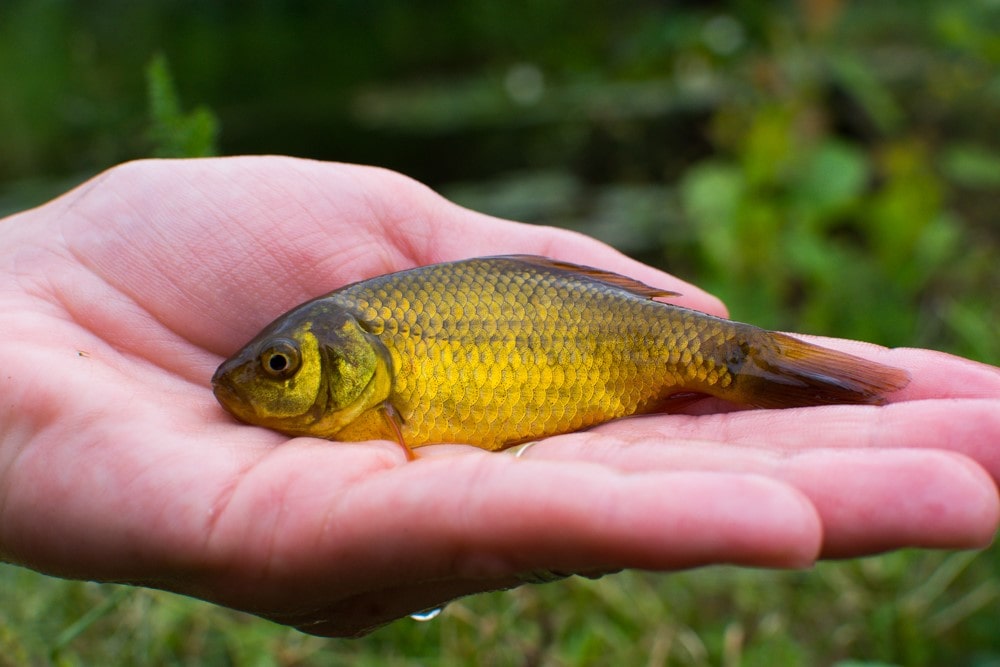
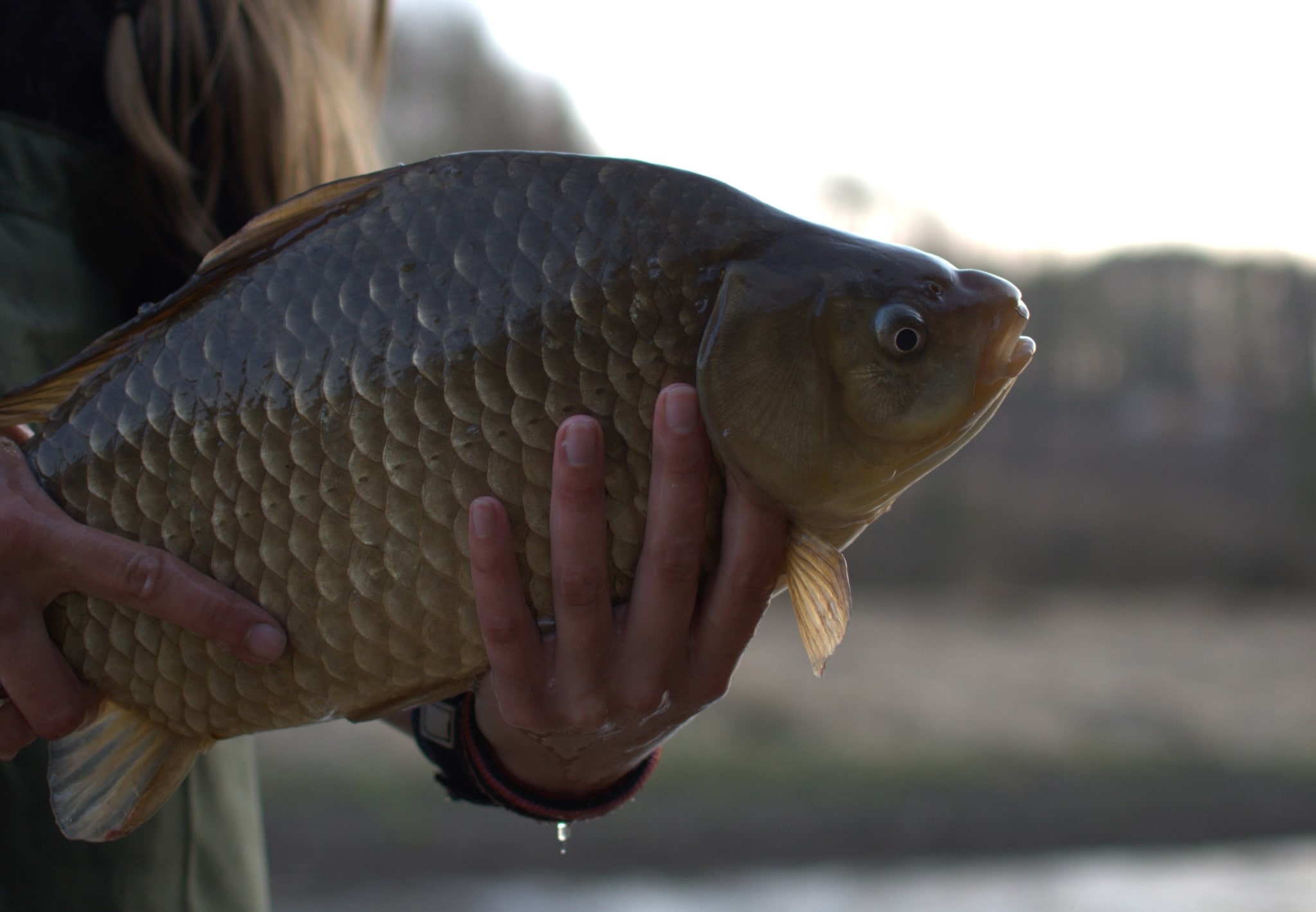
Today we face a fundamental problem: many native species are rapidly disappearing from the nature. At the same time, however, new species are appearing, coming to us from completely different parts of the world - and in their new environment they often behave like Invasive a disturb the natural balance. However, monitoring these changes on such a large scale is very challenging for scientists and conservation institutions, mainly due to limited financial resources and thus the impossibility of full-scale mapping. This is why citizen science is increasingly being promoted as a way to involve the general public in monitoring nature and to help generate valuable data across different areas of biology and conservation. While invasive species are quite commonly monitored thanks to citizen science, this is not yet as widespread for rare and endangered species. The story of the crucian carp is all the more extraordinary.
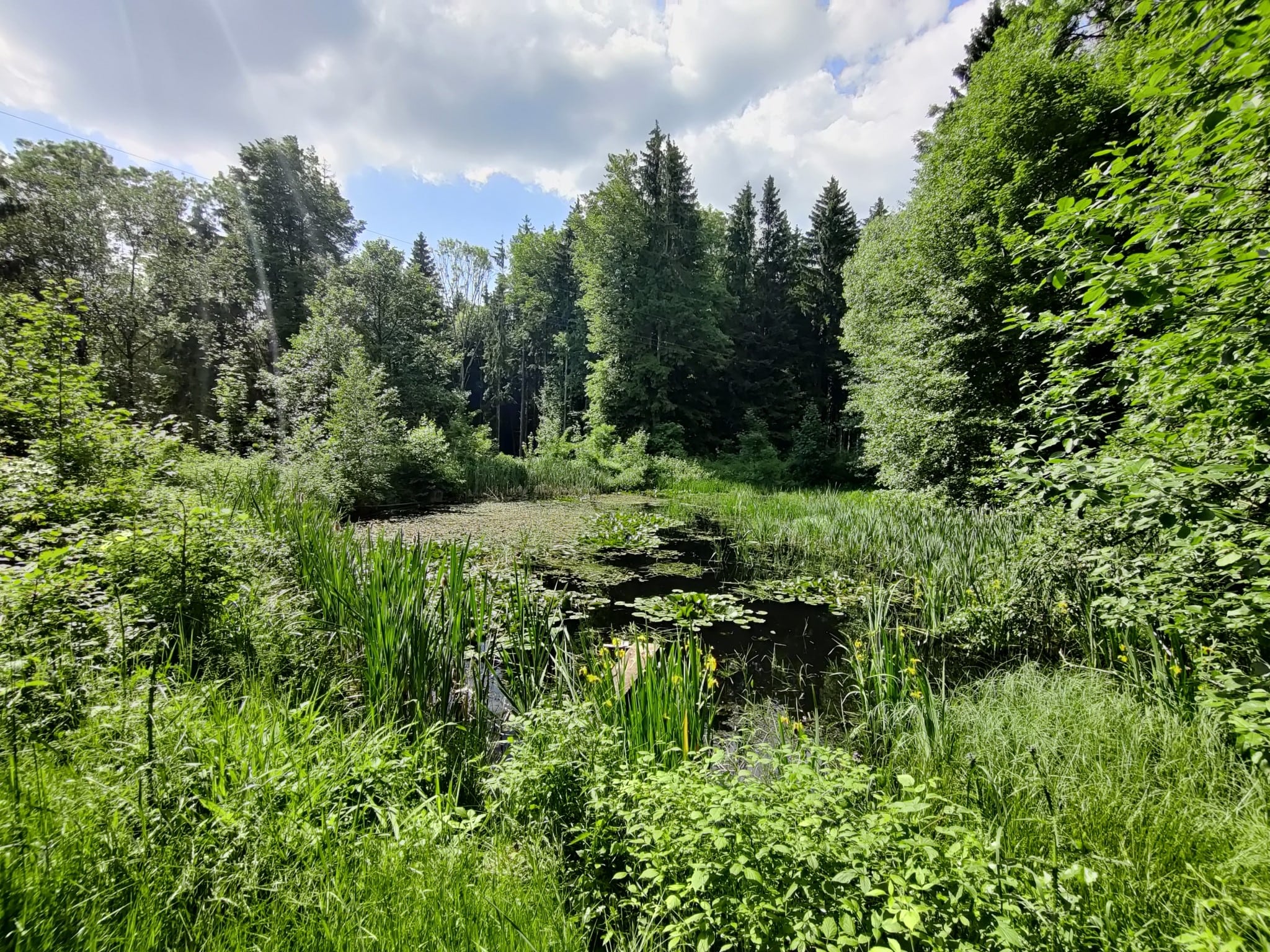
Thanks to the active participation of the public, we were able to collect a number of valuable reports, which we then verified directly in the field. Without this cooperation, we would hardly have been able to map in such detail the often overlooked and hidden places - small flooded quarries, forgotten ponds or inconspicuous pools where this species still survives. In total, our team found around 60 crucian carp populations, but most of them are already gradually giving in to the pressure of invasive species. In addition, we have not prioritised some populations due to the presence of mixed phylogenetic lineages. Although this is only a small fraction compared to how many populations were there before, there are still some that make sense to continue working with and using them to establish new sites. As part of international cooperation, searches are being prepared in other EU countries - for example in Upper Austria under the Interreg Living Treasures programme - and scientists from other countries are also interested in taking the project to their territory.
The future of the conservation of the crucian carp will thus depend primarily on populations that were not discovered by institutions or scientists, but by people who willingly helped us in their free time. It is this exceptional cooperation and mutual trust that the Save the crucian carp team wants to build on - and gradually extend to the protection of other declining fish species.
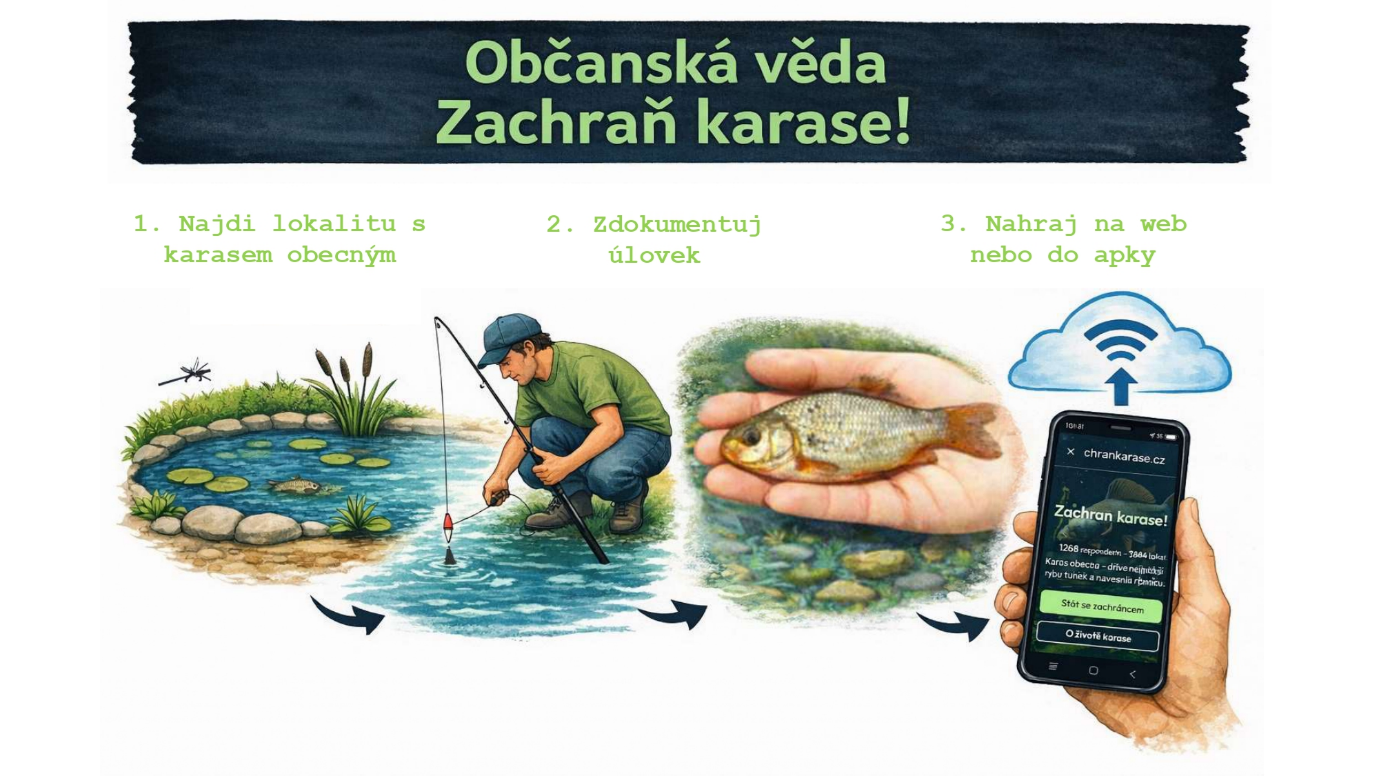
It is also possible to record occurrences via the mobile app: